
Karkala has been shaping stone for at least six hundred years. The Gommateshwara on the hill was carved from a single granite rock in 1432, and it is still the first thing most visitors photograph. The same skill is alive today in the carvers of Sanoor, in the quarries and polishing units around the taluk, and — a different trade entirely — in the cashew factories that grade, pack and ship kernels all over India.
These are businesses that make real things buyers want. Yet most of them still sell the way they did twenty years ago: a phone number passed from one contractor to the next, a WhatsApp photo, a middleman who takes a cut on both sides.
A website will not replace the relationships that built these businesses. But the right kind of website brings in the buyer who has never heard of you — the temple committee in Kerala, the architect in Bengaluru, the Gulf family looking for Diwali gift boxes — and it answers their questions before they have to pick up the phone. This guide is about what that website actually needs, trade by trade.
First, know who is looking for you
The mistake we see most often is building one generic "company profile" site and hoping it works for everyone. It does not, because the three trades are sold to completely different people:
- Cashew is bought by wholesalers, retailers, sweet shops and hotels in bulk, by exporters, and by ordinary families online — especially before festivals.
- Granite is bought by builders, architects, interior designers and homeowners doing up a house, and by exporters buying blocks.
- Stone craft is commissioned by temple committees, trusts and families — often from other states or abroad — for idols, deepastambhas, Nandis, pillars and memorials.
Each of them searches differently, needs different proof, and decides on different things. So the website has to be built around the buyer, not around the factory.
Cashew: sell the grade, not just the company
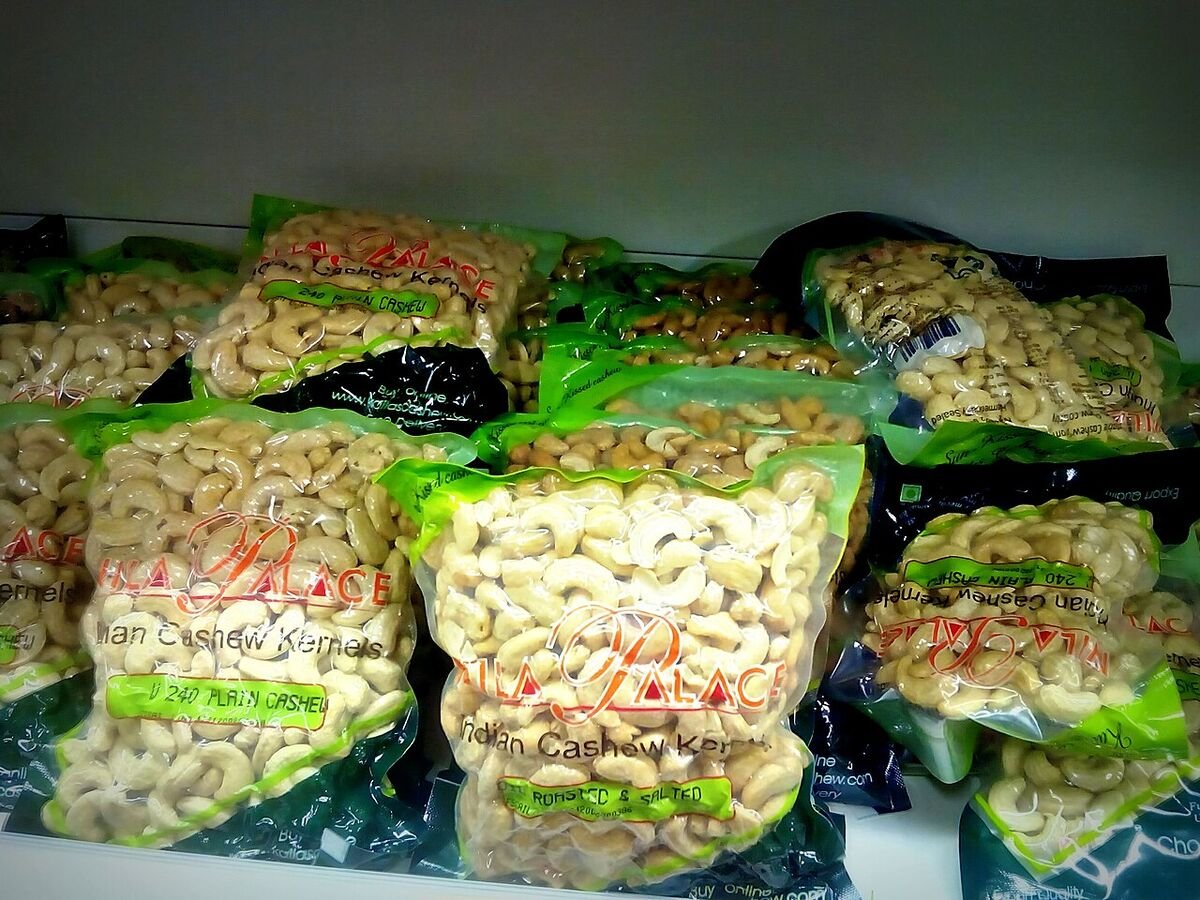
A serious cashew buyer does not search for "cashew company". They search for a grade: W240 cashew price, W320 wholesale, cashew splits bulk. The number is how many whole kernels make up a pound, so W180 is the large, premium nut and W320 is the everyday grade most of the trade runs on. Splits, pieces and scorched grades each have their own buyers.
So the most useful thing a cashew website can have is one page per grade, each with:
- a clear photo of the actual kernels on a plain background, with something beside them for scale;
- the pack sizes you sell — 250 g pouches, 1 kg vacuum packs, 10 kg tins — and your minimum order for wholesale;
- a price, or at least a price range, updated when the market moves. "Price on request" on every item tells the buyer you will make them work for it;
- a WhatsApp button that opens a chat already filled in with the grade and quantity, so the enquiry reaches you with the details instead of just "hi".
Trust matters more with food than with almost anything else. Show your FSSAI licence number on every page footer. If you export, say that you are registered with the Cashew Export Promotion Council and hold an IEC, and mention any lab reports or certifications you can actually produce. Photos of your own processing floor — clean, bright, real — do more than any paragraph about "hygienic standards".
There is a second business hiding inside most cashew units: retail gift boxes. Before Diwali, Ramzan and wedding season, families search for cashew gift packs to send to relatives. A small online store with three or four boxes, UPI payment and courier delivery can sell directly at retail margin, without a distributor in between. It works best as a separate section of the site, with its own simple checkout, so the wholesale pages stay focused on bulk enquiries.
Granite: show the stone the way a buyer will see it
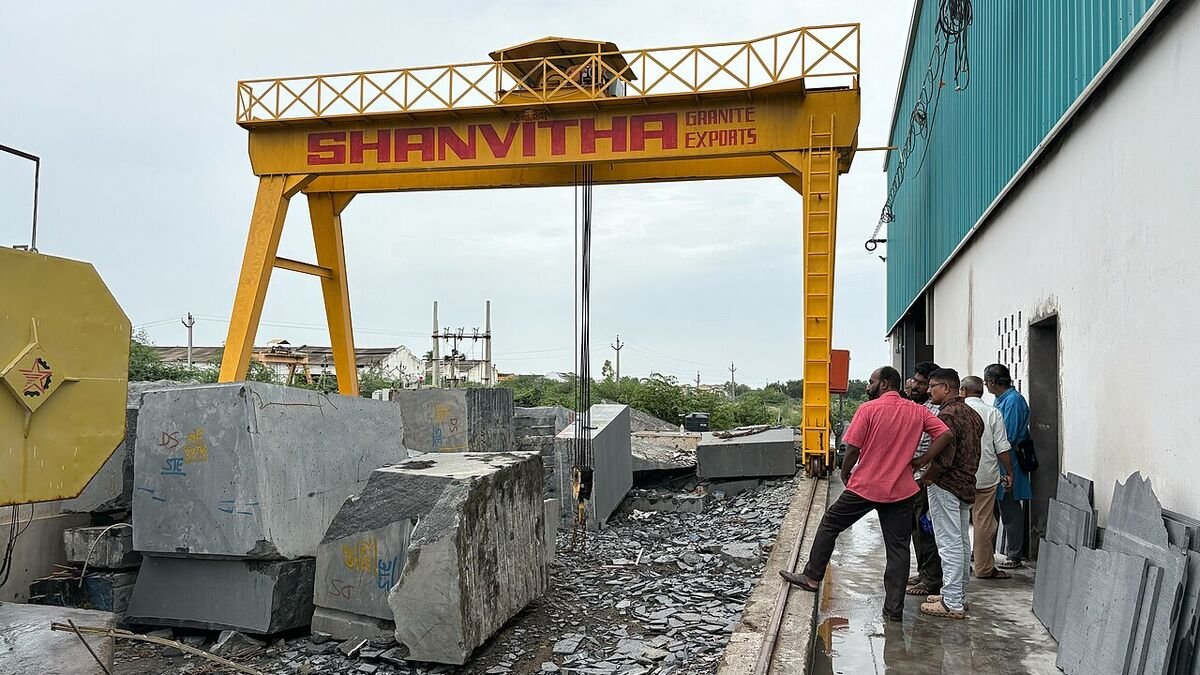
An architect choosing granite for a lobby, or a homeowner choosing a kitchen counter, decides mostly with their eyes. Stock photos of shiny stone are worse than useless — the buyer knows they are not your stone, and they start to wonder what else is not real.
What a granite website needs:
- A stone catalogue, one entry per colour, photographed in daylight, flat, without heavy editing. Show the same stone in each finish you offer — polished, honed, flamed, leather — because they look like different materials.
- The practical details a builder needs before calling: slab and tile sizes, thicknesses, whether you sell blocks, slabs or cut-to-size, and a rough price per square foot.
- Installed projects. Nothing sells granite like a photo of it in a finished house, temple or hotel, with the town named. Ask your customers if you can photograph their floors and stairs; most are proud to say yes.
- A simple quote form that asks for the area, the stone and the delivery location, so the enquiry arrives ready to price.
- Your delivery area, stated plainly. If you deliver across coastal Karnataka and into Kerala, say so. If you only sell ex-yard, say that too.
Export buyers want different things again: block dimensions in metres, quantities, and photos of the actual block with its number painted on it. If you sell blocks for export, give them their own section rather than mixing them in with kitchen countertops.
Stone craft: the website is your portfolio
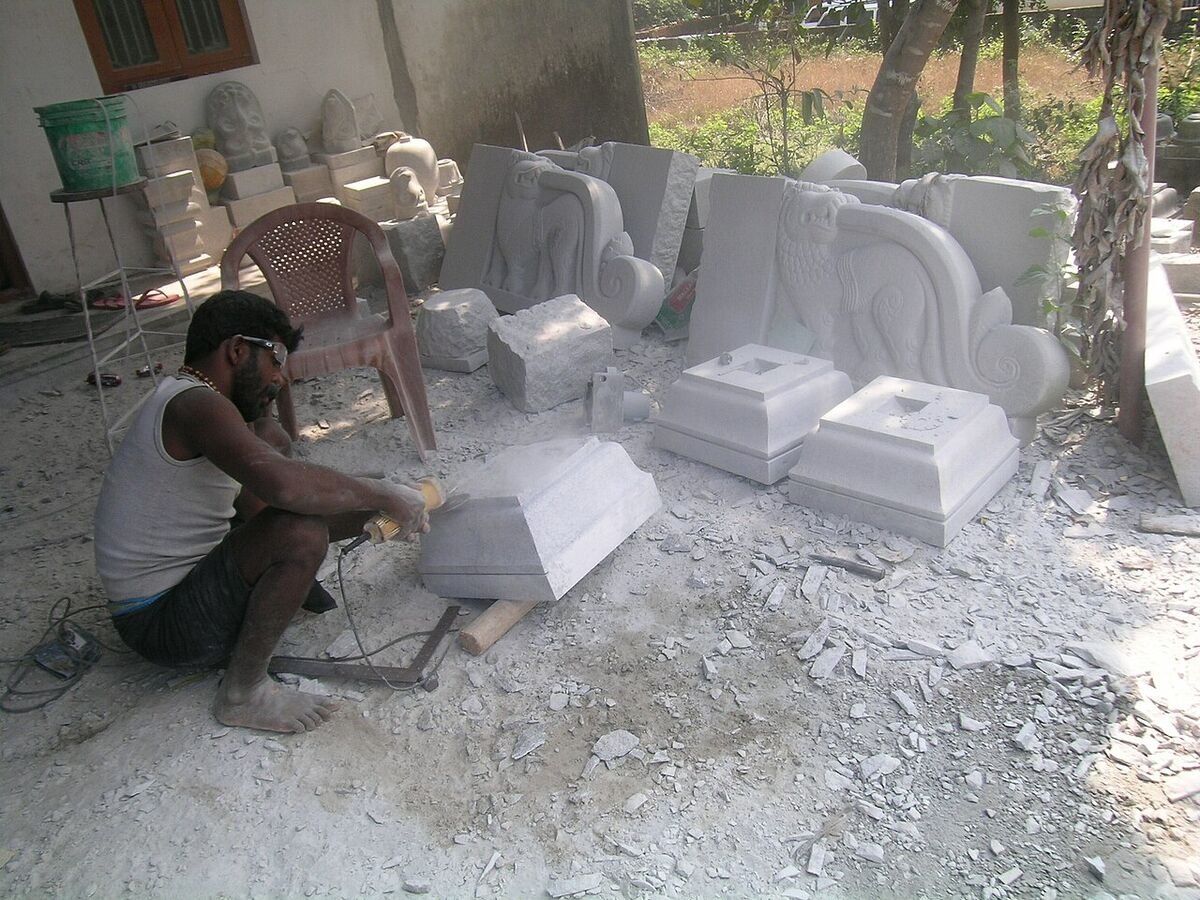
Sculpture is the trade where a website can change the most, because the buyer is usually far away. A temple committee in Tamil Nadu or a family in Dubai commissioning a deity cannot drive to Karkala every week. What they need to see is proof that you have done this before, and a clear picture of how the work will happen.
Build the site around your past work:
- A gallery organised the way buyers think — by deity, by type (idols, pillars, deepastambha, Nandi, memorial, name stones), and by size. Give each piece its height, the stone used, and where it now stands.
- The process, in plain steps. Drawing and measurements, stone selection, progress photos at each stage, final approval, packing and transport. Buyers commissioning something sacred and expensive want to know they will see it before it leaves your yard.
- Short videos of the chisel at work. Nothing proves hand skill like watching it. A thirty-second clip from your phone is enough.
- Transport and installation. Say whether you pack and ship large pieces and whether your team installs on site. For a two-tonne idol, this is often the deciding question.
Language matters here too. Many temple committees are more comfortable in Kannada, Tulu, Malayalam or Tamil than in English. A site in Kannada and English covers most of your buyers; we wrote about how to handle that in Should your website be in Kannada?
What all three trades get wrong
Across cashew, granite and stone, the same handful of mistakes keep good businesses invisible:
- Only a Facebook page. Facebook is useful for posting updates, but it is not what a Bengaluru architect searches. Google shows websites and Business Profiles.
- No Google Business Profile, or one left half-finished. For anyone searching "granite suppliers near me" or "stone sculptor Karkala", the map results appear first. The same phone number, address and name must match everywhere — on the profile, on the website, and in directories. We explain why in Your Google Business Profile matters more than your website.
- Heavy websites that crawl on mobile data. Many of your buyers are on a phone, sometimes in a quarry or a temple office with one bar of signal. Large uncompressed photos and sliding banners make the page take ten seconds to open, and they leave. More on that in Why slow websites lose rankings in India.
- No prices at all. You do not have to publish your final rate. But a starting price per square foot for each granite finish, or per kilo for each cashew grade with "bulk rates on request" beside it, filters out time-wasters and tells serious buyers you are straightforward to deal with.
- Enquiries that go nowhere. A contact form that emails an inbox nobody checks is worse than no form. Every enquiry should reach a phone that someone answers, the same day.
Taking photos that sell
You do not need a professional photographer to start. A recent phone and a few habits get you most of the way:
- Shoot in daylight, near a door or window, never under tube lights. Stone colours and kernel shades look wrong under artificial light.
- Use a plain background — a white sheet for cashew, a clean wall for small carvings.
- Put something beside the product for scale: a coin next to kernels, a person beside a pillar, a tape measure against a slab.
- Take the same product from three angles, and one close-up of the texture or finish.
- Keep the originals. Your web developer should compress them for the website so they load fast without looking blurry.
Where to start
If you do nothing else this month, do these three things:
- Make sure your Google Business Profile is complete, with the right category, real photos and the phone number you actually answer.
- Photograph your ten best products or pieces properly, using the tips above.
- Write down the five questions every new buyer asks you on the phone. Those answers are the first pages your website needs.
When you are ready for the website itself, a catalogue site with enquiry buttons is usually the right first step for granite and sculpture, and a catalogue plus a small online store for cashew. You can see how we approach website design in Karkala and online stores for Karkala businesses, and a real local project we built in Times of Karkala.
Frequently asked questions
Do I need an online store, or is a catalogue website enough?
For granite and stone sculpture, a catalogue with a good enquiry form is enough, because every order is quoted individually. For cashew, a catalogue for wholesale buyers plus a small online store for retail gift packs usually works best.
Should I show prices on my website?
Show at least a starting price or a range. Buyers who see no price at all often assume you are expensive or difficult, and move on to someone who tells them. You can always say bulk and export rates are quoted on request.
Can buyers from other states or abroad really find a Karkala business online?
Yes, if the website clearly names what you make, in the words buyers search for — the cashew grade, the granite colour and finish, the type of idol — and says where you deliver. Temple committees and exporters regularly search beyond their own state for these skills.
How long does it take for a new website to bring enquiries?
A complete Google Business Profile can bring calls within weeks. A new website usually takes a few months to start ranking in Google searches, faster for specific terms like a cashew grade or a stone finish than for broad ones.
Cover: Gommateshwara, Karkala. Photo: Subhashish Panigrahi, Wikimedia Commons, CC BY-SA 3.0.