E-commerce development · Udupi & Mangaluru

Your own online store, in step with your shop

We build online stores for producers, shops and brands on the coast: product pages, UPI checkout, GST invoices, courier dispatch and stock that matches your counter. After launch, the Udupi studio that built your store keeps it running.

Demo screen with made-up data.
Shopify, WooCommerce or custom
picked for what you sell, not out of habit
UPI first
then cards, net banking and cash on delivery
We come to you
in Udupi, Manipal, Mangaluru, Karkala, Kundapura
In your name
domain, store, gateway and courier accounts

In short

What does e-commerce website development include?

E-commerce website development is building your own online store: product pages, a cart, a checkout for UPI, cards or cash on delivery, a GST invoice for every order, and an admin screen for orders, stock and courier pickups. Whirl Designs, a web studio in Udupi, Karnataka, builds these stores on Shopify, WooCommerce or custom code for sellers on the coast and across India.

Updated · Whirl Designs, Udupi

First decision

Marketplace, Shopify, WooCommerce or custom?

Selling online can start in four ways. The plainest one that fits your products is usually the right first step, so this is how the four compare.

A marketplace or WhatsApp catalogue

Best for: Finding out whether people will buy online at all

  • Amazon, Flipkart or a WhatsApp Business catalogue, often running within days
  • The platform brings buyers, but keeps most of the customer relationship
  • Nothing to build, host or look after

A Shopify store

Best for: Standard products, and a team that wants no servers

  • Hosting, security and updates are handled by Shopify
  • Ready themes and apps cover most common needs
  • Checkout and design follow Shopify's own rules

A WooCommerce store

Best for: Stores that publish a lot, or already run WordPress

  • The store and its data sit in a hosting account in your name
  • Extended with plug-ins (add-ons), which need regular updates
  • Suits product guides, recipes or articles next to the shop

A custom store

Best for: Rules no platform handles well, or a shop system to join

  • Wholesale and retail buyers on different terms, made-to-order or loose-weight items
  • Linked straight to your billing and stock, so counter and website agree
  • Takes longer to build, and the code is yours

Most first stores belong on the second or third card. Custom earns its place only when your rules need it, and the written plan says why.

Our work

No client store of ours is live yet

A complete store for a client, taking orders and online payment, is something we are still to deliver. Kadal Cashews, the shop pictured above, is made up, and so are its products and orders. The real work we can point to sits on both sides of a store: public product pages, and the billing and stock systems a store has to talk to.

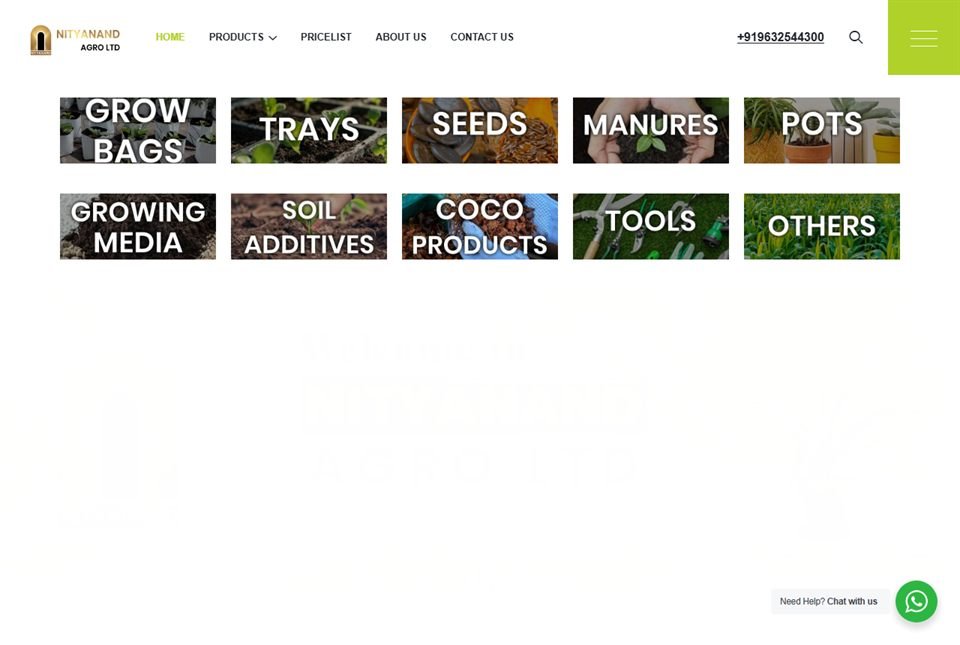
For Nityanand Agro, which sells agri products in Karnataka, we built a public catalogue website. Behind it runs a separate system its staff use through the day on their phones, for billing with or without GST, and for stock. Jayalaxmi Jewellers, in the Karkala gold trade since 1990, shows its collections on a brand website we made, and its staff bill customers at the counter on a retail ERP we built for it.

  • Nityanand Agro: returns, transfers, write-offs and sales all move one stock count, the kind a website would have to sell from
  • Nityanand Agro: separate customer tiers, each billed on its own terms, with sensible fallbacks, the rule a store needs for wholesale and retail buyers
  • Jayalaxmi Jewellers: WhatsApp receipts and reminders go out from the ERP on approved message templates, the same route an order update would take

Closest projects

What you get

Six parts of every store, on any platform

Each one is agreed with you and written into the plan, whether the store runs on Shopify, WooCommerce or our own code.

  1. Product pages made for phonesClear photos, each size or weight as its own option, the full amount with GST shown as one figure, and the delivery time and return terms next to the button. Most shoppers reach the page from an everyday Android handset using mobile data, so every page is tested on one.
  2. A checkout that stays shortPhone number and PIN code come first, so the buyer learns early whether you deliver there. UPI is the first payment choice, then cards, net banking and, if you want it, cash on delivery. Nobody has to make an account, and the page is kept light so it still opens quickly on a weak signal.
  3. Orders, packing and courierYou and your staff add products, change stock and handle orders yourselves, from a computer or a phone. Every order shows as new, packed, shipped, delivered or returned. Labels and tracking come from your courier or a courier aggregator (one account that books several courier companies), and the buyer gets the tracking link by SMS, email or WhatsApp.
  4. A GST invoice with every orderEach order gets an invoice with HSN codes, the product codes GST uses, and with CGST and SGST or IGST worked out from where the parcel is going. Sales can be exported for your accountant or sent into your accounting software, so no one enters an order a second time.
  5. One stock count for shop and siteIf you also sell at a counter or supply other shops, the website sells from the same stock. When the last pack goes at the counter, the product shows as sold out online, instead of taking an order you cannot fill.
  6. The terms Indian rules expectIndia's consumer protection rules for online selling ask you to show your return, refund, delivery and payment terms, and to name a grievance officer who handles complaints. Packed goods also need their label details on the page, such as net weight, the maker's address and, for food, the FSSAI number. These pages are set up with your own terms, for you to confirm before launch.

How it runs

From your product list to the first real order

You place real test orders on your phone before a single customer does.

  1. Your products and your packing table

    We start with what you sell and how it leaves the building: how many products, which sizes or weights, where orders are packed, which courier collects them and whether you take cash on delivery. Near the studio, this happens at your shop or unit; further away, over a video call.

  2. A written plan, and the accounts applied for

    The platform, every page, the payment and delivery rules, and who on your team does what are written down for you to approve. The payment gateway and courier accounts are applied for in your firm's name that same week, because their checks take a few working days.

  3. Products loaded, then checked by you

    Names, photos, weights, HSN codes and stock come in from your spreadsheet or billing software. Photos come from you or a photographer you choose, working from a shot list we give you, and descriptions are written with you rather than copied from a supplier. If you already have a store, its products, customers and orders move across, and old web addresses are redirected so search visitors still arrive.

  4. Test orders before real ones

    With payments in test mode, you order by UPI, card and cash on delivery, then cancel one and return another. Stock, the invoice, the courier label and the buyer's messages all have to come out right before payments are switched to live.

  5. Through the first festival rush

    The first busy weeks, often around Deepavali or a sale day, show what needs changing. Fixes, updates, backups and new features stay with the people who built your store, so a stuck order or a failed payment goes to someone who already knows your setup.

Not a fit

When an online store is the wrong next step

An online store is a second shop that needs minding every day. Sometimes the honest advice is to wait.

  • No order has come in online yet. Sell through a WhatsApp catalogue or a marketplace for a few months first, and build a store once you know what people buy.
  • You expect the store to find its own buyers. A new store gets few visitors until search, ads or social posts send them there; the website on its own does not.
  • Nobody can pack and dispatch orders every working day. Late parcels turn into cancellations, refunds and unhappy reviews faster than any website can make up for.
  • You want a marketplace where other sellers list and get paid. Seller sign-up, payouts and disputes make that a far bigger build than one store, and a poor first step online.

5.0 on Google — read our reviews

Questions

Questions about online stores

How long does an e-commerce website take to build?

Usually three to six weeks for a Shopify or WooCommerce store with a modest catalogue, once photos and product details are ready. A custom store tied to your billing and stock is a bigger job, planned in stages over roughly three to four months. More products, more sizes per product and links to billing or accounting software all add time, and so does waiting for the payment gateway's approval.

Shopify or WooCommerce: which suits a small business in India?

For a small seller with a standard catalogue, Shopify is usually quicker to start and easier to keep running; WooCommerce suits a business that already runs WordPress or wants the store on its own hosting. On Shopify in India, card and UPI payments come through a gateway such as Razorpay or Cashfree. On either platform, GST invoices with HSN codes usually need an add-on, and WooCommerce also needs someone to apply updates every month.

Can customers pay by UPI and cash on delivery?

Yes. UPI, cards and net banking come through a payment gateway, and the money is settled into your bank account. Cash on delivery can be allowed for every order or only some, such as smaller orders or PIN codes your courier serves well. Many sellers also confirm cash-on-delivery orders on WhatsApp before dispatch, to cut down parcels refused at the door.

What documents does a payment gateway need?

Usually your PAN, proof that the business is registered, a cancelled cheque or bank statement, ID of the person signing, and a GST certificate if you have one. The name on the bank account has to match the name on the PAN or business papers, and a mismatch is a common cause of delay. The gateway also checks that the website shows your contact details and refund and delivery terms, so those pages go up first.

Can the online store share stock with my shop's billing software?

Yes, if both sell from one stock count. Where your billing software allows a connection, the store is linked to it. Where it does not, billing and the store can run on one system we build. Returns and cancelled orders put stock back on their own, so nobody corrects the count by hand at the end of the day.

Will my products show up on Google?

They can, but nobody can promise where. Each product and category page gets clear text, a clean web address and structured data, which is labelling in the page code that tells Google what the item is and whether it is in stock. The catalogue can also be sent to Google Merchant Center, Google's product feed, so items can appear in its shopping results. Good photos, genuine reviews and steady work on search decide the rest.

Who owns the store, the payment account and the customer data?

You do. The domain, the hosting or Shopify account, the payment gateway and the courier account are all registered to your business, and we are added as staff users. Customer and order lists can be downloaded whenever you like, and for a custom store you also get the code and a written handover note.

Can the store be in Kannada?

Yes. Product pages, menus, checkout and order messages can be offered in both Kannada and English, with a one-tap switch for the buyer. Kannada product names and descriptions are written by a person rather than a translation tool, then checked by you before launch, so each product reads the way your customers say it.

Worth reading first

WEB & E-COMMERCE

Engineering you can build on.

Clean, documented, tested code on a modern, proven stack — the foundation that keeps your e-commerce development fast and dependable for years.

ShopifyWooCommerceMagentoStripeRazorpayNext.jsShopifyWooCommerceMagentoStripeRazorpayNext.jsShopifyWooCommerceMagentoStripeRazorpayNext.jsShopifyWooCommerceMagentoStripeRazorpayNext.jsShopifyWooCommerceMagentoStripeRazorpayNext.jsShopifyWooCommerceMagentoStripeRazorpayNext.jsShopifyWooCommerceMagentoStripeRazorpayNext.jsShopifyWooCommerceMagentoStripeRazorpayNext.js
checkout/order.ts
const order = await cart.checkout({ payment: "razorpay", currency: "INR" }); ✓ payment captured · order confirmed

Ready when you are

Let's build something that lasts.

Tell us what you sell, how many products you have and how orders reach you today, and you get back a written plan covering the platform, pages, payments, delivery and a likely launch date.

50+
projects shipped for local & global clients_
100%
of the code is yours to keep_
9
real, live projects on our work page — from our Udupi studio_
Whirl Designs assistantAnswers from this site · not a person
Ask about what the studio builds, how a project runs, or what would suit your business. I answer from this site, and I can pass you to the team any time.
WhatsApp us